

A slot session budget is not just about how much money you bring into a game. It is about how long that budget can realistically support your play style.
Two players can start with the same amount and have completely different sessions. The reason is simple: bet size, session length, and volatility put very different levels of pressure on a bankroll.
Good budget management is not about trying to force a win. It is about setting limits that match the kind of session you want to have.
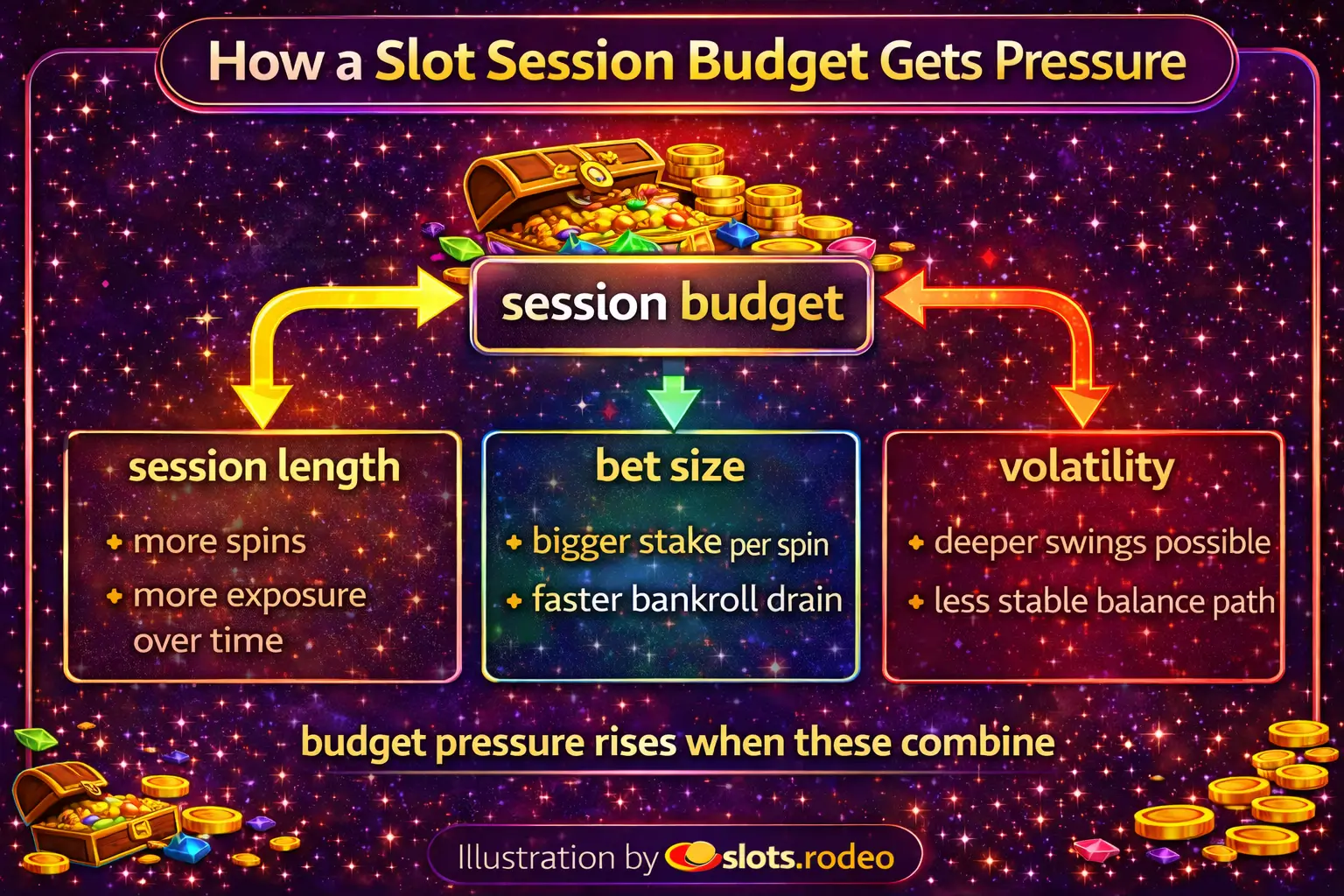
A session budget is a limit, not a target
The first mistake many beginners make is treating the budget like an amount that should be fully used.
That is the wrong frame.
A session budget is a spending limit that defines the maximum you are willing to risk in one session. It is there to control exposure, not to create pressure to keep playing until the full amount is gone.
That changes how you make decisions:
- you choose the budget before the session starts
- you choose a bet size that fits that budget
- you decide how long the session is meant to last
- you avoid increasing risk just because the session is going badly
This is planning. Without it, bankroll management usually turns into reaction.
Why the same budget can behave very differently
A budget does not tell you much on its own. The same amount can feel loose or tight depending on how you use it.
Here is a simple comparison:
| Session budget | Bet size | Volatility | Likely bankroll pressure |
|---|---|---|---|
| $100 | $0.20 | Low to medium | Lower pressure, budget may last longer |
| $100 | $1.00 | Low to medium | Moderate pressure |
| $100 | $2.00 | High | Strong pressure, budget may shrink quickly |
| $100 | $5.00 | High | Very strong pressure, short session risk |
$100
Bet size
$0.20
Volatility
Low to medium
Likely bankroll pressure
Lower pressure, budget may last longer
$100
Bet size
$1.00
Volatility
Low to medium
Likely bankroll pressure
Moderate pressure
$100
Bet size
$2.00
Volatility
High
Likely bankroll pressure
Strong pressure, budget may shrink quickly
$100
Bet size
$5.00
Volatility
High
Likely bankroll pressure
Very strong pressure, short session risk
This is the core point: bankroll pressure comes from the relationship between budget and betting pattern, not from the budget number alone.
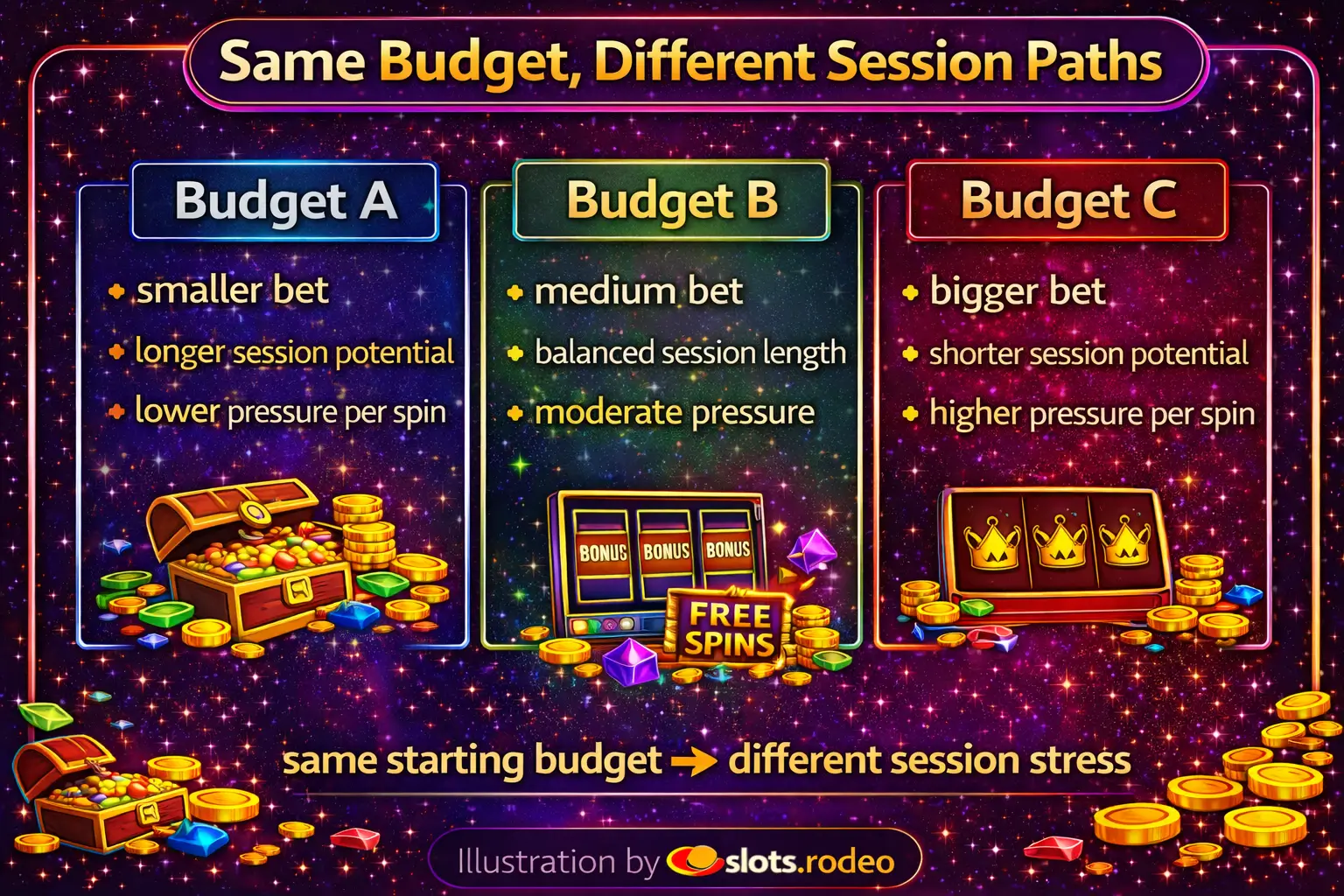
Bet size controls session durability
Bet size is one of the simplest variables, and one of the most important.
A larger bet does not only increase potential payout size. It also reduces how many spins your budget can support. That means less room for variance, less room for bonus timing, and less room for the session to recover from a weak stretch.
A smaller bet does the opposite. It may reduce the impact of a good hit, but it usually makes the session more durable.
A practical way to think about it:
- bigger bets increase speed and pressure
- smaller bets increase time and flexibility
That is why many budget problems start with bet sizing, not with the budget itself.
Session length matters more than many players expect
Some players choose a budget but never think about session length. That creates a mismatch.
For example, a budget may be fine for a short session at a given bet size, but too small for a much longer session. The longer you play, the more exposure you create. Even if nothing dramatic happens on any single spin, time itself adds pressure.
This is why planning around session length is useful.
Ask a practical question before starting:
Do I want a short session with stronger pace, or a longer session with lower pressure per spin?
That question often leads to better decisions than asking which game "pays more."
Volatility changes how quickly pressure can build
Volatility affects how uneven a session may feel.
A higher-volatility slot often concentrates more value into less frequent outcomes. That means the bankroll may go through longer weak stretches before a stronger hit appears, if it appears at all during the session.
A lower-to-medium volatility slot often spreads more value across smaller events. That does not guarantee profit, but it may reduce the feeling of sudden pressure.
This matters because a budget that feels comfortable on one game may feel much tighter on another.
| Volatility level | Typical session feel | Budget effect |
|---|---|---|
| Low | Smaller swings, more stable pacing | Budget may feel less stressed |
| Medium | Mixed pattern of smaller and stronger events | Moderate budget pressure |
| High | Longer dry stretches and sharper swings | Budget pressure can rise quickly |
Low
Typical session feel
Smaller swings, more stable pacing
Budget effect
Budget may feel less stressed
Medium
Typical session feel
Mixed pattern of smaller and stronger events
Budget effect
Moderate budget pressure
High
Typical session feel
Longer dry stretches and sharper swings
Budget effect
Budget pressure can rise quickly
Volatility does not tell you what will happen in one session. It helps explain why some games demand more bankroll tolerance than others.
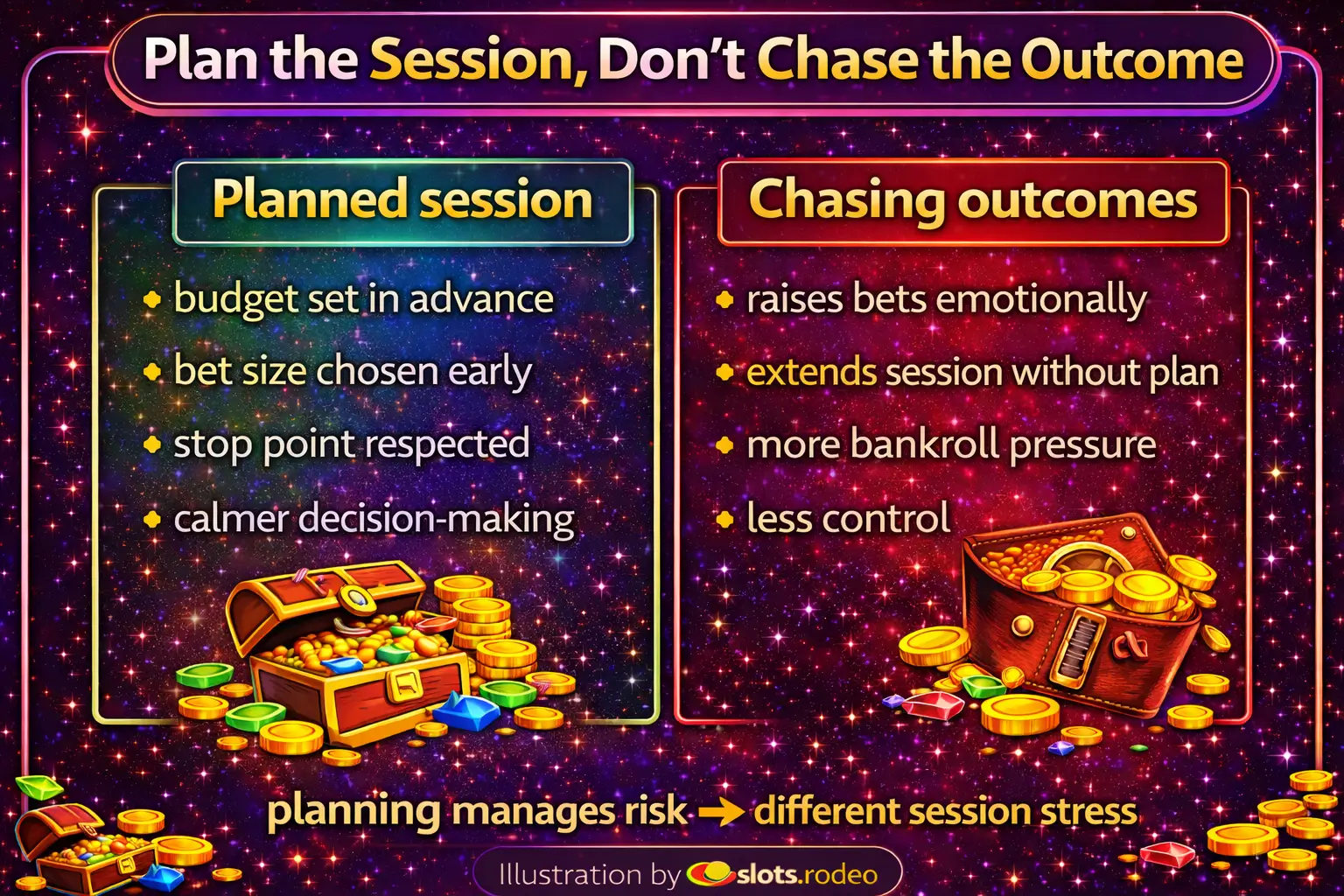
Budget planning works better than outcome chasing
Many session mistakes happen after the session has already started.
Common examples:
- raising the bet after losses
- trying to "win back" the gap quickly
- extending the session because a bonus "must be close"
- changing the plan because the game has been cold
These are not strategy improvements. They are reactions to short-term outcomes.
Slots do not owe the player a correction because the session started badly. A losing stretch is not evidence that a recovery is due. A near miss is not evidence that a bonus is close. Chasing changes the risk profile of the session, often at the worst time.
That is why planning matters more than reading patterns into recent results.
A simple way to build a session budget plan
A budget plan does not need to be complicated. It just needs to exist before play starts.
A basic structure looks like this:
1. Set the maximum session budget
Choose the amount you are willing to lose in full without needing to reload.
2. Decide the session type
Pick one of these:
- shorter and more aggressive
- longer and more controlled
3. Choose a bet size that matches both budget and session type
If the goal is longer play, the bet size usually needs to stay conservative relative to the total budget.
4. Check the slot profile
Look at:
- volatility label
- feature structure
- whether the game is bonus-dependent
- whether the layout or mechanic encourages faster, more impulsive betting
5. Stick to the plan during bad stretches
Do not let a weak run rewrite the budget logic in the middle of the session.
Example budget setups
These examples are not rules. They show how planning changes the shape of a session.
| Goal | Budget | Possible approach | Main idea |
|---|---|---|---|
| Longer, steadier session | $100 | Lower bet size on a lower-to-medium volatility slot | Reduce pressure and extend play time |
| Medium-length balanced session | $100 | Moderate bet size on a medium-volatility slot | Balance activity and durability |
| Higher-risk short session | $100 | Larger bet size on a high-volatility slot | Accept stronger pressure and shorter margin |
Longer, steadier session
Budget
$100
Possible approach
Lower bet size on a lower-to-medium volatility slot
Main idea
Reduce pressure and extend play time
Medium-length balanced session
Budget
$100
Possible approach
Moderate bet size on a medium-volatility slot
Main idea
Balance activity and durability
Higher-risk short session
Budget
$100
Possible approach
Larger bet size on a high-volatility slot
Main idea
Accept stronger pressure and shorter margin
The point is not which one is "best". The point is that the same amount behaves differently depending on how the session is built.
Signs that your session plan is too aggressive
A session setup may be too aggressive if:
- the budget starts to feel tight very early
- you feel pushed to raise the bet after losses
- the slot's volatility feels uncomfortable relative to the bankroll
- the planned session length becomes unrealistic at the current stake
- you are relying on one good feature to save the whole session
These are not just emotional warning signs. They usually mean the original structure put too much pressure on the bankroll.
What good slot budget management actually looks like
Good budget management is less dramatic than many people expect.
It usually means:
- choosing a loss limit before playing
- sizing the bet in relation to that limit
- matching the slot type to the desired session feel
- accepting that variance may not cooperate
- ending the session without trying to repair the result through bigger risk
That does not make the session exciting in a dramatic way. It makes it controlled.
And in practical terms, control is the whole point of a session budget.
Budget decisions should come before the first spin
The strongest slot budget habit is simple: make the key decisions before results start affecting your thinking.
That means deciding in advance:
- how much you are willing to risk
- what kind of session you want
- what bet size fits that goal
- whether the slot's volatility matches the budget
Once that is clear, the session becomes easier to manage. You stop reacting to every stretch and start judging the game against your own limits.
A slot session budget does not protect you because it is large. It protects you when it is planned well enough for the way you actually want to play.

