

Main Slot Types at a Glance
A quick way to think about "slot types" is to separate them into: format (how the reels/grid is built), pay system (how the game counts a win), feature model (bonus buys, hold-and-spin, etc.), and jackpot model (fixed or progressive). A single slot can fit multiple labels at once.
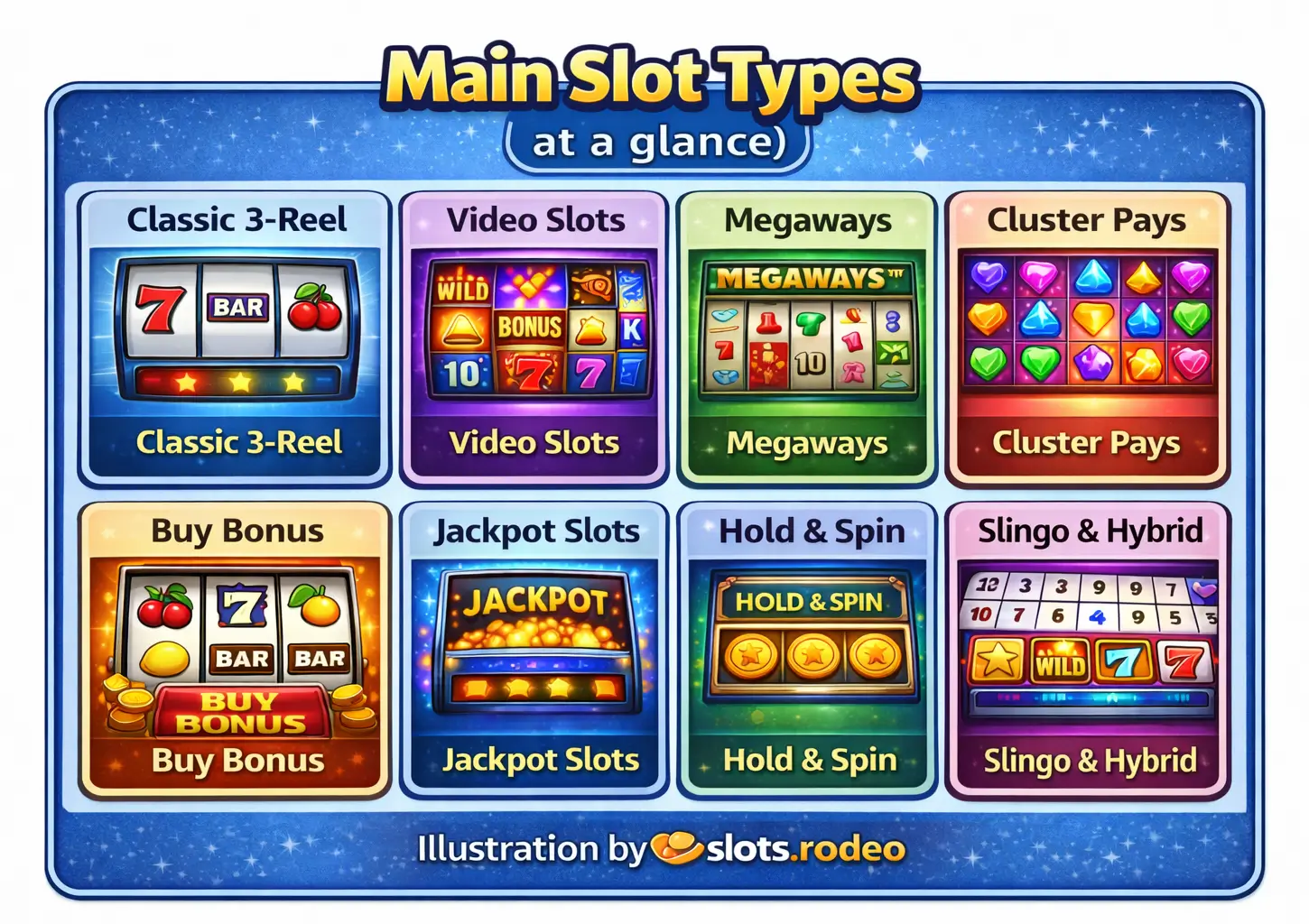
Slot Types by Reel Format
Classic 3-Reel Slots
Classic 3-reel slots are the simplest format: typically 3 reels, compact layout, straightforward symbol sets (fruit, BARs, sevens). Often fewer bonus layers than modern games. Popular with players who want quick spins and minimal rules to memorize.
Video Slots
Video slots are the standard modern format: usually 5 reels (sometimes more), complex symbol rules (Wild variants, multipliers, expanding reels), and bonus modes such as Free Spins, pick features, or multi-stage rounds. Most new releases fall into this category.
Megaways (Variable Ways)
Megaways and similar "variable ways" systems are commonly treated like a slot type: reel heights change from spin to spin, the number of ways to win can vary dramatically, and they are often paired with cascades and multipliers. They feel more dynamic because the grid changes constantly.
Grid / Cluster-Style Games
Some slots use a grid and pay via clusters: symbols form groups that pay when they touch (rules vary by game), often combined with cascades/tumbles and multipliers or expanding grids. This format tends to feel closer to a puzzle-like experience than traditional paylines.
Slot Types by Pay System
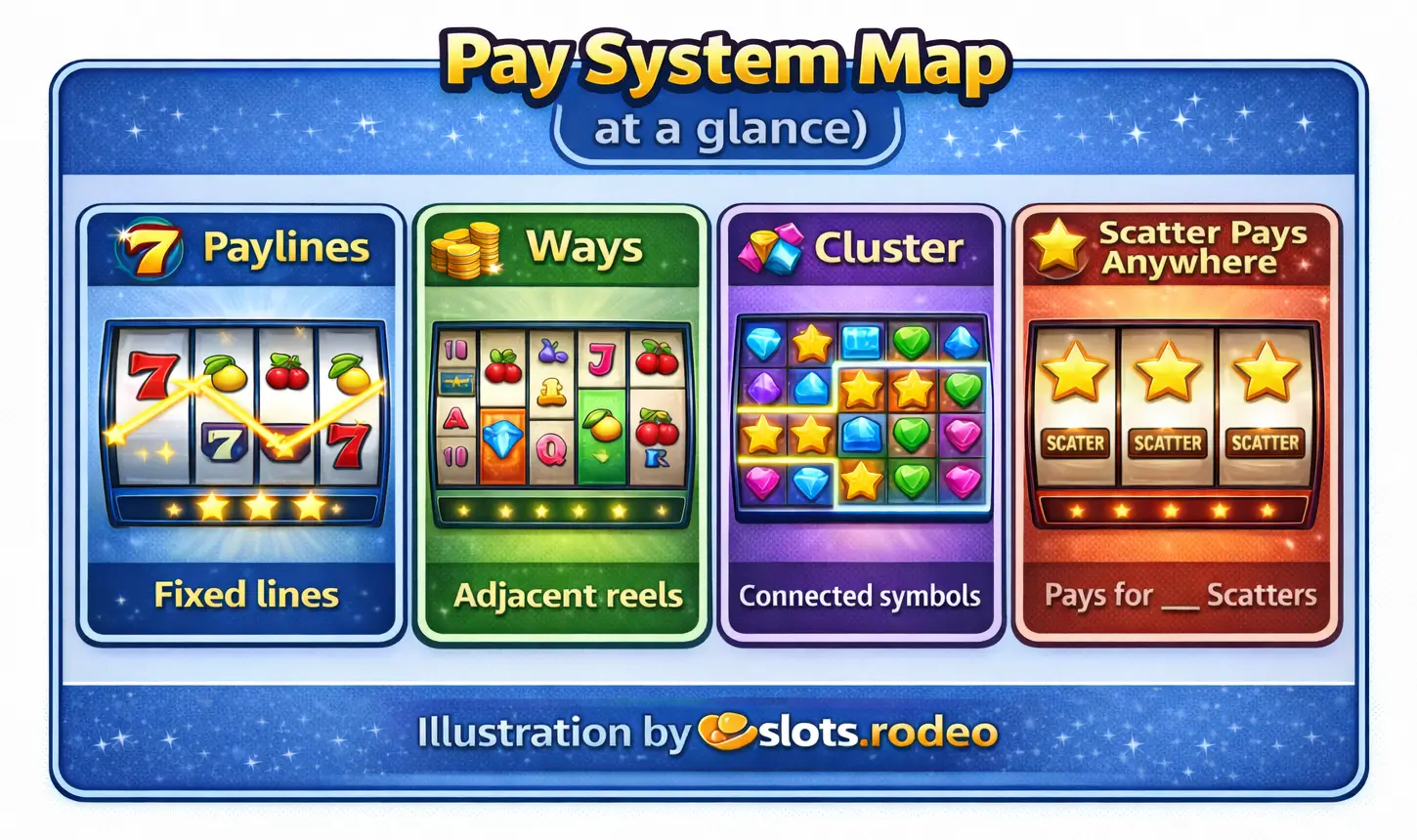
Pay systems define how a win is counted. Two games can look similar but pay differently.
Paylines
Wins follow fixed lines across the reels. Lines can be fixed or adjustable depending on the slot. Usually evaluated left-to-right (some games also pay both ways). Best for players who prefer clear, traditional win paths.
Ways-to-Win (Adjacent Reels)
No fixed lines; wins form by matching symbols on adjacent reels. Multiple matches on the same reel can create multiple combinations. Often paired with larger grids or variable reel sizes. This style can create many small-to-medium combinations in one spin.
Cluster Pays (Connected Symbols)
Wins are based on connected symbol groups rather than lines. The game defines what "connected" means (touching sides, sometimes diagonals). Often designed around cascades and modifiers. Cluster slots are usually easy to follow visually: "big group = win".
Scatter Pays Anywhere
Certain symbols can pay regardless of position (not necessarily on a line). Scatter symbols are also commonly used to trigger features. "Pays anywhere" doesn't automatically mean "better" - it's just a different win rule.
Slot Types by Feature Model
Buy Bonus Slots
These games offer an option to purchase access to a bonus round. It changes how you reach the bonus (paid entry instead of waiting for a trigger) and often increases volatility in practical play because outcomes concentrate into bonus rounds.
Hold & Spin / Respin Slots
A popular modern feature model: special symbols "lock" in place, you get a set number of respins, and payouts accumulate. Usually includes prize values on symbols and a feature "build-up" feel. Easy to understand and creates clear suspense.
Jackpot Slots
Jackpot slots are defined by an added jackpot prize mechanic: can be fixed (static top prize) or progressive (grows over time). Some jackpots have "must drop" or "drop range" rules.
Jackpot Types: Fixed vs Progressive
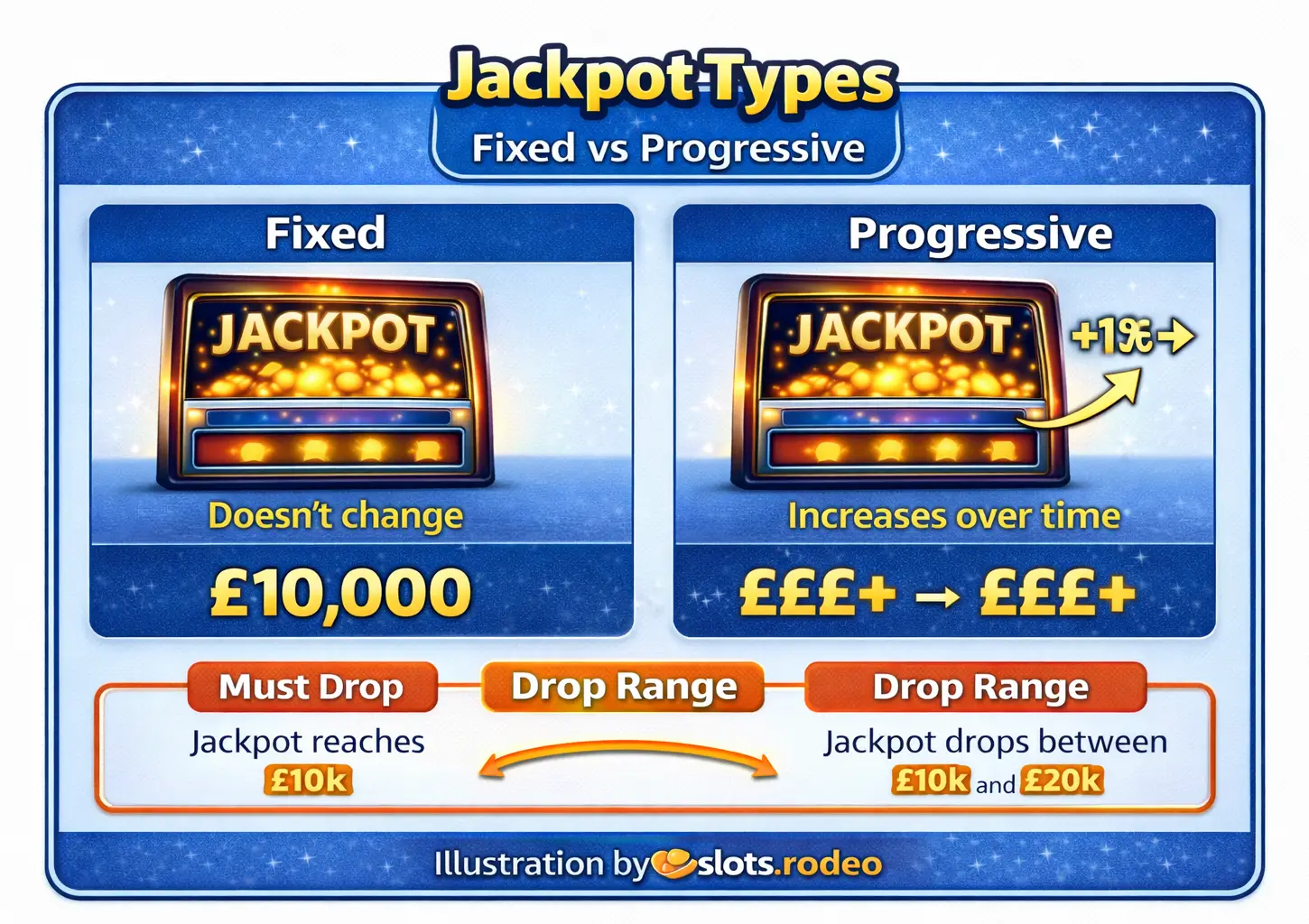
Fixed jackpots: the jackpot value is set and doesn't increase from play. The top prize amount is known upfront.
Progressive jackpots: the jackpot can increase over time, typically as play contributes to the pool. Can be local (single casino/operator) or networked (across many operators).
"Must drop" and "drop range": some progressive jackpots include published behavior such as a must-drop threshold (jackpot must pay once it reaches a certain level) or a drop range (jackpot can pay within a defined range). Not all jackpots use these rules.
Volatility Spectrum by Slot Type
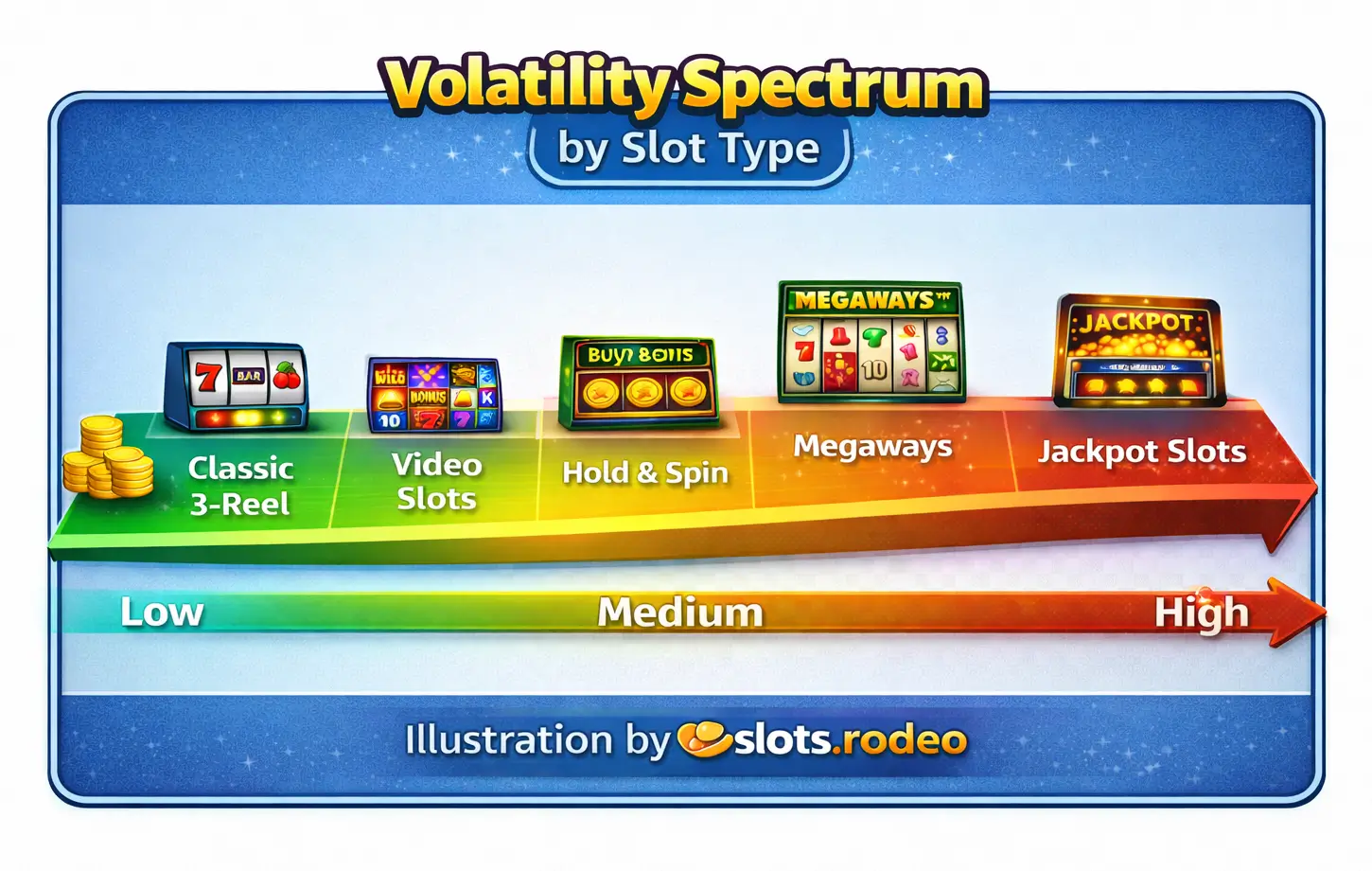
Volatility is about how results are distributed - more frequent smaller wins vs rarer larger hits. Use volatility as a selection filter, not as a promise. Two video slots can feel completely different depending on their math model, features, and max win design.
How to Choose a Slot Type
- Simpler play: classic 3-reel or simpler video slots - fewer feature rules to track.
- Lots of bonus action: feature-heavy video slots, Hold & Spin models, games with strong Free Spins mechanics.
- High win potential / can handle variance: many Megaways/variable ways titles, high-volatility jackpot or feature-centric slots.
- Puzzle-like wins and cascades: cluster pays / grid-based slots.
A good habit: check the paytable and info panel for pay system, Wild/Scatter/Bonus rules, volatility label, and maximum win before playing.
Comparison Table: Common Slot Categories
| Slot Category | What Defines It | Typical Strengths | What to Watch |
|---|---|---|---|
| Classic 3-reel | Small reel set, simple rules | Fast, familiar gameplay | Limited features |
| Video slots | Modern multi-reel format | Features, variety | Rules differ a lot game-to-game |
| Megaways / variable ways | Changing reel sizes/ways | Dynamic spins, high potential | Often higher variance |
| Cluster pays | Wins by connected groups | Clear win visuals, cascades | Rules for connections vary |
| Buy Bonus | Paid bonus entry | Direct feature access | Can concentrate variance into bonuses |
| Hold & Spin | Locked symbols + respins | Simple suspense loop | Usually feature-driven outcomes |
| Jackpot slots | Added jackpot mechanic | Big top prize appeal | Rules vary (fixed vs progressive) |
| Slingo / hybrid | Slot + bingo/puzzle elements | Different pacing | Not a "standard slot" experience |
Classic 3-reel
What Defines It Small reel set, simple rules
Typical Strengths Fast, familiar gameplay
What to Watch Limited features
Video slots
What Defines It Modern multi-reel format
Typical Strengths Features, variety
What to Watch Rules differ a lot game-to-game
Megaways / variable ways
What Defines It Changing reel sizes/ways
Typical Strengths Dynamic spins, high potential
What to Watch Often higher variance
Cluster pays
What Defines It Wins by connected groups
Typical Strengths Clear win visuals, cascades
What to Watch Rules for connections vary
Buy Bonus
What Defines It Paid bonus entry
Typical Strengths Direct feature access
What to Watch Can concentrate variance into bonuses
Hold & Spin
What Defines It Locked symbols + respins
Typical Strengths Simple suspense loop
What to Watch Usually feature-driven outcomes
Jackpot slots
What Defines It Added jackpot mechanic
Typical Strengths Big top prize appeal
What to Watch Rules vary (fixed vs progressive)
Slingo / hybrid
What Defines It Slot + bingo/puzzle elements
Typical Strengths Different pacing
What to Watch Not a "standard slot" experience
Common Misconceptions
- "Megaways always means high volatility."
Many Megaways-style games are high variance, but the pay model can still vary by title. - "Classic slots pay more because they're old-school."
Format doesn't determine RTP - the game's math model does. - "Progressive jackpots are always better value."
A jackpot mechanic changes prize structure; it doesn't automatically improve average return. - "Cluster pays is the same as ways-to-win."
Both avoid fixed lines, but they count wins differently: clusters use connected groups; ways use adjacent reels.
Key Takeaway
"Slot type" isn't a single classification. Most slots can be understood through four practical lenses: format, pay system, feature model, and jackpot mechanics. If you learn these categories, you can scan a casino lobby faster, understand what you're about to play, and choose games that match your preferred pace, feature depth, and volatility.
Types of Slots FAQ
Common questions explained clearly.
The most common categories are classic 3-reel slots, video slots, Megaways/variable ways games, cluster pays/grid games, jackpot slots, and feature models like hold & spin or buy bonus.
Classic slots typically have fewer reels and simpler rules. Video slots usually have more reels, more paylines/ways, and more bonus features.
Many are designed with higher variance, but it depends on the specific game's math model and feature structure.
Classic 3-reel and simpler video slots are usually easiest to learn because the rules and feature layers are lighter.
Not always. The presence of a jackpot doesn't guarantee a lower RTP. Check the game's paytable/info panel for the actual RTP value.
Cluster pay games award wins when groups of matching symbols connect (according to the rules), rather than paying along fixed paylines.


